
Journal of an Overland Expedition in Australia From Moreton Bay to Port Essington, a distance of upwards of 3000 miles, during the years 1844-1845 — Reading Notes
Edition facts
Before opening Journal of an Overland Expedition in Australia From Moreton Bay to Port Essington, a distance of upwards of 3000 miles, during the years 1844-1845 — Reading Notes, the edition data offers a quick orientation: 143,494 words, 10 hr 24 min estimated reading time, and 12 detected text sections.
The text analysis averages about 26.4 words per sentence, while the detected sections provide another way to judge how the source is divided.
Project Gutenberg metadata also associates the work with “Australia -- Description and travel,” connecting these edition facts with the source record’s subject description.
Calculated from edition completeness, EPUB availability, text structure and catalogue metadata. Not a user rating.
How this score is calculated
- Description quality20 pts
- Title & short description10 pts
- Source metadata20 pts
- Text length15 pts
- Chapters / structure15 pts
- EPUB file integrity20 pts
Total of 100 points, scaled to a 2.5-5.0 range. Editions with an empty description or a missing EPUB file are not scored.
Read the Text
John had been there twice before, and it was not four miles distant: they, however, did not return, and, at nine o'clock at night, we heard firing to the north-east. We answered by a similar signal, but they did not come in. I sent Mr. Hodgson and Charley to bring them back. If they had simply given the bridle to their horses, they would have brought them back without delay; but probably both got bewildered.
The latitude of this lagoon, which I called Kent's Lagoon, after F. Kent, Esq., is 26 degrees 42 minutes 30 seconds. We tried to obtain opossums, during the clear moonlight night, but only caught the common rabbit-rat.
Our horses go right into the scrub, to get rid of the little flies, which torment them. The weather is very fair; the regular westerly breeze, during the day, is setting in again: the dew is very abundant during clear nights: the morning very cold; the water of the lagoon 8 degrees to 10 degrees warmer than the air.
We have regularly balanced our loads, and made up every bag of flour to the weight of 120 pounds: of these we have eight, which are to be carried by four bullocks. The chocolate and the gelatine are very acceptable at present, as so little animal food can be obtained. The country continues to be extremely boggy, though the weather has been fine, with high winds, for the last four days. Tracks of Blackfellows have been seen; but they appear rare and scattered in this part of the country. Though we meet with no game, tracks of kangaroos are very numerous, and they frequently indicate animals of great size. Emus have been seen twice.
Thermometer at sunset 65 degrees 7 minutes (75 degrees in the water); at a quarter past one, 90 degrees. South-westerly winds.
Oct. 19.--During the night, north-easterly breeze; at the break of day, a perfect calm; after sunset easterly winds again. Thermometer at sunrise 51 degrees (60 degrees in the water); a cloudless sky. Mr. Hodgson and Charley, whom I had sent to seek John and Caleb, returned to the camp with a kangaroo. I sent them immediately off again, with Mr. Roper, to find the two unfortunate people, whose absence gave me the greatest anxiety. Mr. Roper and Mr. Gilbert had brought one pigeon and one duck, as a day's sport; which, with the kangaroo, gave us a good and desirable supper of animal food. During the evening and the night, a short bellowing noise was heard, made probably by kangaroos, of which Mr. Gilbert stated he had seen specimens standing nine feet high. Brown brought a carpet snake, and a brown snake with yellow belly. The flies become very numerous, but the mosquitoes are very rare.
On a botanical excursion I found a new Loranthus, with flat linear leaves, on Casuarina, a new species of Scaevola, Buttneria, and three species of Solanum. Mr. Hodgson brought a shrubby Goodenia; another species with linear leaves, and with very small yellow blossoms, growing on moist places in the forest; two shrubby Compositae; three different species of Dodonaea, entering into fruit; and a Stenochilus, R. Br. with red blossoms, the most common little shrub of the forest.
Mr. Gilbert brought me a piece of coal from the crossing place of the creek of the 10th October. It belongs probably to the same layer which is found at Flagstone Creek, on Mr. Leslie's station, on Darling Downs. We find coal at the eastern side of the Coast Range, from Illawarra up to Wide Bay, with sandstone; and it seems that it likewise extends to the westward of the Coast Range, being found, to my knowledge, at Liverpool Plains, at Darling Downs, and at Charley's Creek, of the 10th Oct. It is here, as well as at the east side, connected with sandstone. Flint pebbles, of a red colour, were very abundant at Charley's Creek, and in the scrub, which I called the Flourspill, as it had made such a heavy inroad into our flour-bags. The flat on which we encamp, is composed of a mild clay, which rapidly absorbs the rain and changes into mud; a layer of stiff clay is about one foot below the surface. The grasses are at present in full ear, and often four feet high; but the tufts are distant, very different from the dense sward at the other side of the Range. As we left the Myal country of the Condamine, we left also its herbage, abounding in composite, leguminous, and chenopodiaceous plants, with a great variety of grasses.
Oct. 20.--This morning, at half-past nine o'clock, Messrs. Roper, Hodgson, and Charley, returned with John Murphy and Caleb. They had strayed about twelve miles from the camp, and had fairly lost themselves. Their trackers had to ride over seventy miles, before they came up to them, and they would certainly have perished, had not Charley been able to track them: it was indeed a providential circumstance that he had not left us. According to their statement, the country is very open, with a fine large creek, which flows down to the Condamine; this is the creek which we passed on the 10th Oct., and which I called "Charley's Creek." The creek first seen by Mr. Hodgson joins this, and we are consequently still on westerly waters.
Thermometer, at sunrise, 54 degrees (in the water 64 degrees); at eight o'clock 64 degrees. Strong easterly and northerly winds during the last two nights. It becomes calm at a quarter past three, with the rise of Venus.
Mr. Calvert brought an edible mushroom out of Flourspill Scrub.
The Loranthus of the Myal grows also on other Acacias with glaucous leaves. A bright yellow everlasting is very fine and frequent.
Oct. 22.--I left Kent's lagoon yesterday. In order to skirt the scrub, I had to keep to the north-east, which direction brought me, after about three miles travelling through open forest, to Mr. Hodgson's creek, at which John Murphy and Caleb had been lost. The creek here consists of a close chain of fine rocky water-holes; the rock is principally clay, resembling very much a decomposed igneous rock, but full of nodules and veins of iron-stone. I now turned to the northward, and encamped at the upper part of the creek. To-day I took my old course to the north-west, and passed a scrubby Ironbark forest, and flat openly-timbered forest land. I came again, however, to a Bricklow scrub, which I skirted, and after having crossed a very dense scrubby Ironbark forest, came to a chain of rushy water-holes, with the fall of the waters to the north-east. The whole drainage of a north-easterly basin, seems to have its outlet, through Charley's Creek, into the Condamine.
On the banks of Hodgson's Creek, grows a species of Dampiera, with many blue flowers, which deserves the name of "D. floribunda;" here also were Leptospermum; Persoonia with lanceolate pubescent leaf; Jacksonia (Dogwood); the cypress-pine with a light amber-coloured resin (Charley brought me fine claret-coloured resin, and I should not be surprised to find that it belongs to a different species of Callitris); an Acacia with glaucous lanceolate one-inch-long phyllodia; and a Daviesia; another Acacia with glaucous bipinnate leaves; a white Scaevola, Anthericum, and a little Sida, with very showy blossoms. Spotted-gum and Ironbark formed the forest; farther on, flooded-gum.
Pigeons, mutton-birds (Struthidia), are frequent, and provided us with several messes; iguanas are considered great delicacies; several black kangaroos were scen to day.
The weather very fine, but hot; the wind westerly; thermometer at sunset 74 degrees (84 degrees in the water.)
Oct. 23.--At the commencement of last night, westerly winds, the sky clear; at the setting of the moon (about 3 o'clock a.m.), the wind changed to the north-east; scuddy clouds passing rapidly from that quarter; at sunrise it clears a little, but the whole morning cloudy, and fine travelling weather.
We travelled in a north-westerly direction, through a Casuarina thicket, but soon entered again into fine open Ironbark forest, with occasionally closer underwood; leaving a Bricklow scrub to our right, we came to a dry creek with a deep channel; which I called "Acacia Creek," from the abundance of several species of Acacia. Not a mile farther we came on a second creek, with running water, which, from the number of Dogwood shrubs (Jacksonia), in the full glory of their golden blossoms. I called "Dogwood Creek." The creek came from north and north-east and flowed to the south-west, to join the Condamine. The rock of Dogwood Creek is a fine grained porous Psammite (clayey sandstone), with veins and nodules of iron, like that of Hodgson's creek. A new gum-tree, with a rusty-coloured scaly bark, the texture of which, as well as the seed-vessel and the leaf, resembled bloodwood, but specifically different; the apple-tree (Angophora lanceolata); the flooded-gum; a Hakea with red blossoms; Zierea; Dodonaea; a crassulaceous plant with handsome pink flowers; a new myrtaceous tree of irregular stunted growth, about 30 feet high, with linear leaves, similar to those of the rosemary; a stiff grass, peculiar to sandstone regions; and a fine Brunonia, with its chaste blue blossoms, adorn the flats of the creek as well as the forest land. The country is at present well provided with water and grass, though the scattered tufts of Anthistiria, and the first appearance of the small grass-tree (Xanthorrhaea), render its constancy very doubtful. The winding narrow-leaved Kennedyas, Gnaphaliums in abundance; Aotus in low bushes.
No game, except a kangaroo rat, pigeons, ducks, and mutton-birds. Mr. Phillips brought a crawfish from the creek: it had just thrown off its old shell. Fresh-water muscles plentiful, though not of the size of those of the Condamine. A small rat was caught this morning amongst our flour bags; it had no white tip at the tail, nor is the tail so bushy as that of the rabbit-rat: probably it was a young animal.
Oct. 24.--The creek being boggy, we had to follow it down for several miles to find a crossing place. Even here, one of the horses which carried the tea, fell back into the water, whilst endeavouring to scramble up the opposite bank, and drenched its valuable load. We now travelled through a country full of lagoons, and chains of water-holes, and passed through several patches of cypress-pine, until we came to another creek with rocky water-holes, with the fall to the eastward, probably joining Dogwood Creek, from which we were not four miles distant. Fine grassy flats accompanied the creek on its left, whilst a cypress-pine forest grew on its right bank. The latitude of our yesterday's camp was 26 degrees 26 minutes 30 seconds and, to-day, we are only four miles more to the westward. The country is still so flat and so completely wooded--sometimes with scrubs, thickets, Acacia, and Vitex groves, sometimes with open Ironbark forest intermingled with spotted gum--that no view of distant objects can be obtained. Several Epacridaceous shrubs and species of Bossiaea and Daviesia reminded me of the flora of the more southern districts.
Oct. 25.--We travelled about twelve miles in a north-westerly direction, our latitude being 26 degrees 15 minutes 46 seconds. The country in general scrubby, with occasional reaches of open forest land. The rosemary-leaved tree of the 23rd was very abundant. An Acacia with spiny phyllodia, the lower half attached to the stem, the upper bent off in the form of an open hook, had been observed by me on the sandstone ridges of Liverpool Plains: and the tout ensemble reminded me forcibly of that locality. The cypress-pine, several species of Melaleuca, and a fine Ironbark, with broad lanceolate, but not cordate, glaucous leaves, and very dark bark, formed the forest. An arborescent Acacia, in dense thickets, intercepted our course several times. Bronze-winged pigeons were very numerous, but exceedingly shy.
The stillness of the moonlight night is not interrupted by the screeching of opossums and flying squirrels, nor by the monotonous note of the barking-bird and little owlet; no native dog is howling round our camp in the chilly morning: the cricket alone chirps along the water-holes; and the musical note of an unknown bird, sounding like "gluck gluck" frequently repeated, and ending in a shake, and the melancholy wail of the curlew, are heard from the neighbouring scrub.
Oct. 26.--Our journey was resumed: wind in the morning from the west; light clouds passing rapidly from that quarter.
Messrs. Hodgson and Roper, following the chain of ponds on which we had encamped, came to a large creek, with high rocky banks and a broad stream flowing to the south-west. We passed an Acacia scrub, and stretches of fine open Ironbark forest, interspersed with thickets of an aborescent species of Acacia, for about four miles in a north-west course, when we found ourselves on the margin of a considerable valley full of Bricklow scrub; we were on flat-topped ridges, about 80 to 100 feet above the level of the valley. After several attempts to cross, we had to turn to the N. N. E. and east, in order to head it, travelling through a most beautiful open Ironbark forest, with the grass in full seed, from three to four feet high. Following a hollow, in which the fall of the country was indicated by the grass bent by the run of water after heavy showers of rain, we came to fine water-holes, about five miles from our last camp.
At the other side of the valley, we saw distant ranges to the north-west and northward. The scrub was occasionally more open, and fine large bottle-trees (Sterculia) were frequent: the young wood of which, containing a great quantity of starch between its woody fibres, was frequently chewed by our party. Fusanus was abundant and in full bearing; its fruit (of the size of a small apple), when entirely ripe and dropped from the tree, furnished a very agreeable repast: the rind, however, which surrounds its large rough kernel, is very thin.
Oct. 27.--During last night a very strong, cold, westerly wind.
After travelling about 3 1/2 miles north, we were stopped by a Bricklow scrub, which compelled us to go to the east and south-east. I encamped, about three miles north-east by north from my last resting place, and examined the scrub: it was out of the question to cross it. Mr. Gilbert shot three black cockatoos and a bronze-winged pigeon.
Oct. 28.--During the night it was very cold, though no wind was stirring. In the morning we experienced an easterly breeze. Travelling to the eastward and east by south, I found that the water-holes outside of the scrub at which we were encamped, changed into a creek with rocky bed, having its banks partly covered with cypress-pine thickets. I crossed it about three miles lower down, and, finding the Ironbark forest sufficiently open, turned to the northward; scarcely three miles farther, we came to another creek of a character similar to that of the last, which I suppose to be one of the heads of Dogwood Creek. The blue Brunonia was again frequent; the grass five feet high, in full ear, and waving like a rye field. The soil, however, is sandy and rotten, and the grass in isolated tufts. We encamped about four miles north-east from our last camp.
PARTY REDUCED BY THE RETURN OF MR. HODGSON AND CALEB--MEET FRIENDLY NATIVES--NATIVE TOMB--THE DAWSON--VERVAIN PLAINS--GILBERT'S RANGE--LYND'S RANGE--ROBINSON'S CREEK--MURPHY'S LAKE--MOUNTAINOUS COUNTRY--EXPEDITION RANGE--MOUNT NICHOLSON--ALDIS'S PEAK--THE BOYD.
Nov. 3.--For the past week, the heat was very oppressive during the day, whilst, at night, it was often exceedingly cold; for two or three hours before dawn, and for an hour after sunset, it was generally delightful, particularly within the influence of a cheerful cypress-pine fire, which perfumes the air with the sweet scent of the burning resin.
It had now become painfully evident to me that I had been too sanguine in my calculations, as to our finding a sufficiency of game to furnish my party with animal food, and that the want of it was impairing our strength. We had also been compelled to use our flour to a greater extent than I wished; and I saw clearly that my party, which I had reluctantly increased on my arrival at Moreton Bay, was too large for our provisions. I, therefore, communicated to my companions the absolute necessity of reducing our number: all, however, appeared equally desirous to continue the journey; and it was, therefore, but just that those who had joined last, should leave. Mr. Gilbert, however, who would, under this arrangement, have had to retire, found a substitute in Mr. Hodgson, who had perhaps suffered most by additional fatigues; so that he and Caleb, the American negro, prepared for their return to Moreton Bay. Previous, however, to their departure, they assisted in killing one of our steers, the meat of which we cut into thin slices, and dried in the sun. This, our first experiment--on the favourable result of which the success of our expedition entirely depended--kept us, during the process, in a state of great excitement. It succeeded, however, to our great joy, and inspired us with confidence for the future. The little steer gave us 65lbs. of dried meat, and about 15lbs. of fat. The operation concluded, we took leave of our companions; and although our material was reduced by the two horses on which they returned, Mr. Hodgson left us the greater part of his own equipment. The loss of the two horses caused us some little inconvenience, as it increased the loads of the animals. The daily ration of the party was now fixed at six pounds of flour per day, with three pounds of dried beef, which we found perfectly sufficient to keep up our strength.
Whenever it was necessary to delay for any time at one place, our cattle and horses gave us great trouble: they would continually stray back in the direction we came from, and we had frequently to fetch them back five, seven, and even ten miles. Mr. Hodgson's horses had returned even to the camp of the 21st October, and three days were required to find them and bring them back. These matters caused us considerable delay; but they were irremediable. On the 30th October, towards evening, we were hailed by natives, from the scrub; but, with the exception of one, they kept out of sight. This man knew a few English words, and spoke the language of Darling Downs; he seemed to be familiar with the country round Jimba; and asked permission to come to the camp: this, however, I did not permit; and they entered the scrub, when they saw us handle our guns, and bring forward two horses to the camp. On the 3rd of November they visited us again, and communicated with us, behaving in a very friendly way: they pointed out honey in one of the neighbouring trees, assisted in cutting it out and eating it, and asked for tobacco; it was, however, impossible to make any presents, as we had nothing to spare. They particularly admired the red blankets, were terror-struck at the sight of a large sword, which they tremblingly begged might be returned into the sheath, and wondered at the ticking of a watch, and at the movement of its wheels. The greater part were young men of mild disposition, and pleasing countenance; the children remained in the distance, and I only saw two women.
According to their statements, the scrub extends to the Condamine.
The scrub was crossed in every direction by tracks of wallabies, of which, however, we could not even get a sight. The glucking bird--by which name, in consequence of its note, the bird may be distinguished--was heard through the night. They live probably upon the seeds of the cypress-pine; the female answers the loud call of the male, but in a more subdued voice.
A Gristes, about seven inches long, resembling the one described in Sir Thomas Mitchell's journey, but specifically different from it, was caught in the water-holes of the creek, which I called "Dried-beef Creek," in memorial of our late occupation.
A Goodenoviaceous shrub, a pink Hibiscus, and a fine prostrate Sida, were found between the camp of the 27th October and Dried-beef Creek.
Ludwig Leichhardt's journal opens with a dedication to his patrons and a preface acknowledging Captain P. P. King's editorial help, establishing the work as a collaborative scientific record. The narrative begins in medias res, with the party leaving the last station and immediately encountering fossil remains on the Darling Downs. Leichhardt's prose is notably dual: he switches between dry cataloguing of botanical specimens—such as Exocarpus latifolius with its 'yellow succulent leaf-stalk'—and evocative landscape descriptions, like hills whose 'rugged crests' resemble 'the lifted crest of an irritated cockatoo.' This tension between the empirical and the poetic defines the journal's voice.
Diction: The Scientist and the Storyteller
Leichhardt's word choices reveal a mind trained in natural history but alive to the strange. He describes a tree's 'singularly disposed horizontal branches' and notes that a leguminous shrub 'would be an ornament to our gardens,' blending taxonomic precision with aesthetic judgment. When recording the bullock's death, he writes of 'watery tissue' that 'turned into a yellow substance, having the taste of the fried yolk of an egg'—a simile that grounds the unfamiliar in domestic experience. His vocabulary for the land is equally layered: 'wallums and wallabies fled for security,' and the 'rose-breasted cockatoo' is given its scientific name (Cocatua Eos, GOULD.) even as it flocks to 'patches of fresh burnt grass.' This habit of pairing Linnaean labels with sensory detail creates a text that is both field guide and travelogue.
Dialogue: Voices from the Expedition
Direct speech is sparse, but when it appears, it carries weight. The journal records Charley's 'misconduct' and the moment 'Murphy and Caleb lost' and later found, though the quoted words are absent—the narrative reports actions rather than conversations. Leichhardt's own voice dominates, but he occasionally lets the party's tensions surface through reported speech: 'Charley and Brown become unruly' is a chapter heading that hints at conflict. The lack of extended dialogue may reflect the journal's function as a scientific record, but it also suggests a leader who observes his men's behavior without dramatizing it. When natives are encountered, their speech is not transcribed; instead, Leichhardt notes their 'friendly' demeanor or the 'different idiom' they speak, keeping the focus on his own interpretive framework.
Description: The Land as a Living Text
Leichhardt's descriptions are meticulous and often surprising. He notes that 'heaps of rocks with clusters of trees' give summits 'the resemblance of the lifted crest of an irritated cockatoo,' a simile that animates the geology. His eye for detail extends to the behavior of animals: 'swarms of crows and kites took possession of our camp' after the party left, and their 'boldness was indeed remarkable.' The landscape is never static; it is 'broken by low ranges' and 'exceedingly rocky hills and peaks' that appear 'one after another.' Even the soil is characterized: 'a stiff soil, but mixed with so much sand that even the Severn tree grew well.' These observations accumulate into a portrait of a country that is both harsh and fecund, where every plant and rock seems to carry a story.
Structure: The Journal as a Record of Endurance
The journal's structure is chronological, marked by daily entries and chapter headings that summarize events: 'Allowance of flour reduced,' 'Natives spear a horse,' 'Great want of water.' This rhythm of crisis and routine mirrors the expedition's physical demands. Leichhardt intersperses astronomical calculations ('I took a set of lunar sights, and calculated my longitude 143 degrees 30 minutes') with descriptions of drying meat or finding water. The prose moves between the immediate—'We had scarcely left our camp, when swarms of crows'—and the reflective, as when he notes that a tree 'has never been seen on easterly waters, but it was the invariable companion of all the larger freshwater rivers round the gulf.' This alternation between the particular and the general gives the journal a cumulative authority, as each observation builds a larger picture of the unknown continent.
Readers approaching Leichhardt's journal should attend to the interplay between his scientific training and his narrative instincts. The text rewards those who read slowly, noticing how a botanical description can suddenly shift into a simile drawn from European experience, or how a note about dwindling flour sits beside a passage on the 'fine eatable gum' of a Terminalia tree. The journal is not merely a record of survival but a document of how one man tried to make sense of a new world through the language of his own discipline.
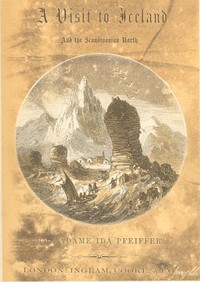
There’s something about Leichhardt’s quiet patience with the land that stays with you long after closing the journal — the way he just notes what he sees, without needing to conquer it. I felt that same gentle stillness reading Visit to Iceland and the Scandinavian North — A Closer Reading, like being left alone with a place that asks nothing of you.
Carter Harris
1 week agoNoah Rodriguez
1 week ago-
Joseph Washington - 3 weeks ago
{'rating': 5, 'text': "An extraordinary firsthand account of exploration in the Australian outback. The author's detailed observations of the landscape, flora, fauna, and Aboriginal encounters are invaluable. Despite the harsh conditions, the narrative is vivid and gripping. A must-read for anyone interested in Australian history or the spirit of adventure."} -
Lori Benjamin Schaefer - 3 weeks ago
{'rating': 2, 'text': "Despite its historical significance, the narrative is dense and tedious. The author's matter-of-fact style makes the journey feel monotonous, and the lack of emotional reflection leaves little to connect with. While it documents an important expedition, it requires patience and academic interest to get through."} -
Thomas Matthew Brown - 1 week ago
{'rating': 3, 'text': "This journal provides a detailed record of the expedition, but the writing is often dry and technical. The author's scientific focus is admirable, yet it comes at the expense of storytelling. Still, for those fascinated by survival in the wild and early Australian history, it offers a wealth of information."}
How did this book work for you?
Your answers remain private and are stored only in this browser.
Camila White
2 weeks ago