1

A Lady's Visit to the Gold Diggings of Australia in 1852-53 — Context and Discussion
(0 User reviews)
805
Project Gutenberg
2003
Not confirmed
Gold mines and mining -- Australia; Australia -- Description and travel
Readers of public-domain and historical texts
Project Gutenberg digital edition
en
Edition facts
Words
56,856
Reading time
248 min
Text sections
6
This digital edition of A Lady's Visit to the Gold Diggings of Australia in 1852-53 — Context and Discussion is described by source-level measurements including 56,856 words, 4 hr 8 min estimated reading time, and 6 detected text sections.
The text analysis averages about 24.2 words per sentence, while the detected sections provide another way to judge how the source is divided.
Project Gutenberg metadata also associates the work with “Gold mines and mining -- Australia,” connecting these edition facts with the source record’s subject description.
Source:
Project Gutenberg record #4054
Mrs. Charles Clacy's 1853 account of traveling from England to the Australian goldfields, blending personal narrative with practical observations on digger life, landscape, and the precarious economy of the rush.
Read the complete public-domain text at its original source.
Read on Project GutenbergMrs. Charles Clacy begins her narrative with an apology for her youth and sex, but quickly establishes a practical purpose: to inform the mothers, wives, and sisters left behind in England. She promises accuracy over marvels, and the excerpts bear this out. The opening chapter recounts her brother's sudden decision to abandon Homer and Euclid for goldfield guides, and within three weeks they are aboard ship. The prose is brisk, detail-oriented, and unromantic—she notes the sun shining on masts at Gravesend, but no lingering sentiment. This matter-of-fact tone, combined with a clear eye for the logistics of travel and mining, sets the stage for a document that is part travelogue, part social report.
A Lady's Perspective on the Gold Rush
Clacy is acutely aware of her unusual position as a woman traveling to the diggings. She frames her account as a service to anxious female relatives, but the excerpts show her engaging directly with the male-dominated world of mining. She describes women cradling ore with infants in their arms, and a ten-year-old girl sewing veils outside a blanket tent—details that highlight the presence of women and children in this rough environment. Her own role as an observer and companion to her brother allows her to move between domestic and industrial spaces, noting both the butcher's tent with half-sheep hanging and the quiet nook where the little girl works. This dual perspective gives the narrative a distinctive texture, blending the practical concerns of a lady with the raw realities of the goldfields.
The Economy of Rumor and Goods
Clacy repeatedly shows how information and commodities circulate at the diggings. A story of a twenty-pound weight of gold turns out to be a fabrication by a party wanting to sell their claims. She observes that there are always plenty of 'new chums' to be caught and taken in. The material culture of the rush is vividly rendered: a hawker shouts 'Vandemonian happles' from a cart, and a butcher's tent displays halves of sheep, gridirons, saucepans, and cradles all ticketed for sale. These details are not mere color; they illustrate a precarious economy where rumor drives movement and goods are exchanged in a makeshift market. Clacy's eye for such transactions—and her skepticism toward inflated reports—gives her account a critical edge.
Landscape and Labor in the Gullies
The physical setting of the diggings is rendered in precise, unadorned prose. Clacy describes deserted holes of great depth, the blows of picks, the splash of water, and the rocking of cradles. She and her companion walk up a gully, passing diggers at work and a solitary tent made of a blanket suspended over a rope. The landscape is not picturesque but functional—a space defined by labor and the marks of human effort. The little girl sewing veils sits on a piece of rock, her head bent over coarse green gauze. Clacy's descriptions avoid the sublime; they focus on what can be seen and heard: the stentorian cry of the apple seller, the scattered goods, the pale face of the child. This attention to sensory detail grounds the narrative in a specific, unglamorous place.
Encounters with Vulnerability
One of the most striking passages in the excerpts is the encounter with the ten-year-old girl. She is working industriously, has not sold a veil all week, and speaks imploringly. Frank, Clacy's brother, buys one in a kindly tone. The scene is brief but resonant, revealing the economic desperation that coexists with the promise of gold. Clacy does not moralize; she simply records the girl's pale features and the volume of sorrow they speak. This restraint is characteristic. Throughout the excerpts, she presents hardship—the deserted holes, the failed claims, the child labor—without overt commentary. The effect is to let the details accumulate, building a picture of the goldfields that is neither triumphant nor tragic, but carefully observed.
Readers approaching this text should attend to the tension between Clacy's stated intention—to provide accurate information for anxious families—and the narrative's drift toward vignettes of daily life. The excerpts suggest a work that is less a systematic guide than a series of situated observations. Pay attention to the small transactions, the rumors, and the faces of those who do not strike gold. Clacy's voice is steady, her judgments implicit. The book rewards a slow reading that follows the movement from ship to gully, noting how the landscape and its people are rendered with a lady's eye for detail and a digger's sense of risk.
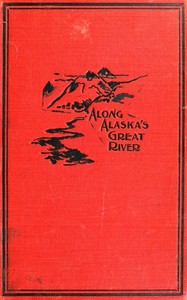
That rainy afternoon, Mrs. Clacy’s mud-caked boots and the precarious gamble of each gold pan felt almost domestic against the drumming on my window. Her careful observations of a landscape both harsh and hopeful lingered. Later, thumbing through my shelves, I found myself pulled toward a colder, vaster frontier where the river, not gold, was the only thread through the unknown. It seemed a quiet, natural echo. Along Alaska's Great River A Popular Account of the Travels of an Alaska Exploring Expedition along the Great Yukon River, from Its Source to Its Mouth, in the British — A Closer Reading
There are no reviews for this eBook.
There are no comments for this eBook.
Reader reflection
How will you remember this book?
Save your reaction, strongest insight, and memorable passage.
Your progress
0
/
10
2
How much did you enjoy the reading experience?
3
How likely are you to recommend this book?
4
What was the reading difficulty like?
5
Was the book moving at the right speed?
6
Did the book give you something worth debating?
7
Did the book meet your expectations?
8
How would you rate its originality?
9
What did this book teach you most?
10