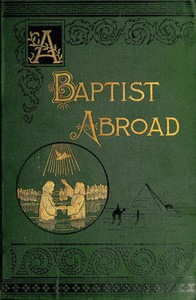
A Baptist Abroad: Travels and Adventures of Europe and all Bible Lands — Text and Context
Edition facts
Before opening A Baptist Abroad: Travels and Adventures of Europe and all Bible Lands — Text and Context, the edition data offers a quick orientation: 125,387 words, 9 hr 6 min estimated reading time, and 55 detected text sections.
The text analysis averages about 19.6 words per sentence, while the detected sections provide another way to judge how the source is divided.
Project Gutenberg metadata also associates the work with “Middle East -- Description and travel,” connecting these edition facts with the source record’s subject description.
Calculated from edition completeness, EPUB availability, text structure and catalogue metadata. Not a user rating.
How this score is calculated
- Description quality20 pts
- Title & short description10 pts
- Source metadata20 pts
- Text length15 pts
- Chapters / structure15 pts
- EPUB file integrity20 pts
Total of 100 points, scaled to a 2.5-5.0 range. Editions with an empty description or a missing EPUB file are not scored.
Read the Text
ient Horse and a Run for Eternity—Strange Sceptre and Despotic Sway—Beauty in White Robes—Approaching the Metropolis—Business Heart of the New World—A Bright Face and a Cordial Greeting—An Hour with the President—More for a Shilling and Less for a Pound—A Stranger Dies in the Author’s Arms—Namesake—Prospects of Becoming a Great Man—A Confused College Student—The Hour of Departure—Native Land. Page, 23
A Difficulty with the Officers of the Ship—A Parting Scene—Danger on the Atlantic—A Parallel Drawn—Liberty Enlightening the World—Life on the Ocean Wave—Friends for the Journey—The Ship a Little World—A Clown and his Partner—Birds of a Feather—Whales—Brain Food—Storm at Sea—A Frightened Preacher—Storm Rages—A Sea of Glory—Richard Himself Again—Land in Sight—Scene Described—Historic Castle—Voyage Ended—Two Irishmen. Page, 29
English Railway Coaches—Millionaires, Crowned Heads, and Fools—A Conductor Caught on a Cow-catcher—Last Rose of Summer—Off on Foot to the Land of Burns—Appearance of Country and Condition of People—Destination Reached—Doctor Whitsitt and Oliver Twist—The Ploughman Poet—His Cottage—His Relics—His Work and Worth—His Grave and Monument—A Broad View of Life. Page, 38
A Jolly Party of Americans—Dim-Eyed Pilgrim—Young Goslings—An American Goose Ranch—Birthplace of Robert Pollok and Mary Queen of Scots—The Boston of Europe—Home of Illustrious Men—A Monument to the Author—Monument to Sir Walter Scott—Edinburgh Castle—Murdered and Head Placed on the Wall—Cromwell’s Siege—Stones of Power—A Dazzling Diadem—A Golden Collar—Baptized in Blood—Meeting American Friends. Page, 47
A TRAMP-TRIP THROUGH THE HIGHLANDS.
His Royal Highness and a Demand for Fresh Air—A Boy in his Father’s Clothes—Among the Common People—Nature’s Stronghold—Treason Found in Trust—Body Quartered and Exposed on Iron Spikes—Receiving a Royal Salute—Following no Road but a Winding River—Sleeveless Dresses and Dyed Hands—Obelisk to a Novelist and Poet—On the Scotch Lakes—Eyes to See but See Not—A Night of Rest and a Morning of Surprise—A Terrestrial Heaven—A Poetic Inspiration—A Deceptive Mountain—A Glittering Crown—Hard to Climb—An Adventure and a Narrow Escape—Johnson Gives Out—Put to Bed on the Mountain Side—On and Up—A Summit at Last—Niagara Petrified—Overtaken by the Night—Johnson Lost in the Mountains—A Fruitless Search—Bewildered—Exhausted—Sick. Page, 57
A GENERAL VIEW OF SCOTLAND.
Highlands and Lowlands—Locked up for Fifteen Days—The Need of a Good Sole—A Soft Side of a Rock—The Charm of Reading on the Spot—A Fearful Experience—Bit and Bridle—Thunder-Riven—Volcanic Eruption—Dangerous Pits—An Hundred-Eyed Devil—Gloomy Dens—Meeting an Enemy—Eyes Like Balls of Fire—Voice Like Rolling Thunder—A Speedy Departure—Leaping from Rock to Rock—Silver Thread among the Mountains—Imperishable Tablets—The Cave of Rob Roy and the land of the MacGregors—Lady of the Lake and Ellen’s Isle—Lodging with Peasants and with Gentlemen—Rising in Mutiny—Strange Fuel—Character of Scotch People—Scotch Baptists—Sunrise at Two O’Clock in the Morning. Page, 67
FROM DUNDEE TO MANCHESTER.
Scotch Presbyterians in Convention—Their Character and Bearing—On the Footpath to Abbotsford—The Home of Scott—Five Miles through the Fields—Melrose Abbey and the Heart of Bruce—Hospitality of a Baptist Preacher—Adieu to Scotland—Merry England—Manchester—Exposition and Prince of Wales—Manchester and Cotton Manufacturers—A $25,000,000 Scheme—Dr. Alexander Maclaren—His Appearance—The Force of his Thought—The Witchery of his Eloquence—His Hospitality Enjoyed—A Promise Made. Page, 75
Three Baptist Associations—Centennial Year and Jubilee Year—Baptists Seen at their Best—Doctor Alexander Maclaren—Matchless Eloquence—Hon. John Bright Delivers an Address—Boundless Enthusiasm—English Hospitality—A Home with the Mayor. Page, 84
A SOJOURN IN ENGLAND AND ON TO WALES.
Arrested and Imprisoned—Released without a Trial—Nottingham—Dwellers in Caves—Seven Hundred Years Old—Forests of Ivanhoe and Robin Hood—Birthplace of Henry Kirk White—Home of the Pilgrim Fathers—Home of Thomas Cranmer—A Guide’s Information—Home of Lord Byron—Wild Beasts from the Dark Continent—A Sad Epitaph—Byron’s Grave—A Wedding Scene—Marriage Customs—Wales and Sea-Bathing—Among the Mountains—Welsh Baptists—A Tottering Establishment. Page, 90
Entering London—The Great City Crowded—Six Million Five Hundred Thousand People Together—Lost in London—A Human Niagara—A Policeman and a Lockup—The Jubilee and the Golden Wedding—“God Save the Queen.” and God Save the People—Amid England’s Shouts and Ireland’s Groans Heard. Page, 98
Traveling in London—London a Studio—The Hum of Folly and the Sleep of Traffic—Five Million Heads in Nightcaps—Too Many People Together—Survival of the Fittest—Place and Pride—Poverty and Penury—Beneficence in London—East End—Assembly Hall—A Converted Brewer—His Great Work—Meeting an Old Schoolmate. Page, 107
A TRIO OF ILLUSTRIOUS MEN.
Joseph Parker—Canon Farrar—Charles H. Spurgeon. Page, 118
NOTTINGHAM, CAMBRIDGE, AND BEDFORD.
Preaching to 2,500 People—Entertained after the Manner of Royalty—Excursion to Cambridge—What Happened on the Way—Received an Entertainment by the Mayor—Cambridge University—King’s Chapel—Fitzwilliam Museum—Trinity College—Cambridge Bibles—Adieu to Friends—Bedford—The Church where John Bunyan Preached—Bedford Jail, where Bunyan wrote _Pilgrim’s Progress_—Bunyan’s Statue—Elstow, Bunyan’s Birthplace—His Cottage—His Chapel—An Old Elm Tree. Page, 123
THE BAPTISTS OF ENGLAND.
Their Number and Divisions—The Regular Baptists—Their Movements and Progress. Page, 130
LAST OF ENGLAND AND FIRST OF THE CONTINENT.
Windsor Castle, the Home of England’s Queen—Queen Victoria—The Home of Shakespeare—Across the Channel—First Impressions—Old Time Ways—Brussels on a Parade—Waterloo Re-enacted—A Visit to the Field of Waterloo—A Lion with Eyes Fixed on France—Interview with a Man who Saw Napoleon—Wertz Museum—“Napoleon in Hell”—“Hell in Revolt against Heaven”—“Triumph of Christ”—Age Offering the Things of the Present to the Man of the Future. Page, 143
FROM BELGIUM TO COLOGNE AND UP THE RHINE.
Brussels—Its Laces and Carpets—Belgium a Small Country—Cultivated like a Garden—Into Germany—Aix-La-Chapelle—Birthplace of Charlemagne—Capital of Holy Roman Empire—Cathedral Built by Charlemagne—A Strange Legend—Shrine of the Four Relics—A Pulpit Adorned with Ivory and Studded with Diamonds—Cologne—Its Inhabitants—Its Perfumery—Its Cathedral—A Ponderous Bell—A Church Built of Human Bones—Sailing up the Rhine—A River of Song—Bonn—Its University—Birthplace of Beethoven—Feudal Lords—The Bloody Rhine—Dragon’s Rock—A Combat with a Serpent—A Convent with a Love Story—Empress of the Night—Intoxicated—Coblentz—A Tramp-Trip through Germany—Sixteen Thousand Soldiers Engaged in Battle—Enchanted Region—Loreli—Son-in-Law of Augustus Caesar—Birthplace of Gutenberg, the Inventor of Printing. Page, 155
FROM FRANKFORT TO WORMS.
Frankfort-on-the-Main—Met at Depot by a Committee—Frankfort, the Home of Culture and Art—Birthplace of Goethe—“He Preaches like a God”—The Home of Rothschild—A Visit to his House—Worms and its History—Luther and a Bad Diet—Luther Monument—Theses Nailed on the Door—Fame of Luther and his Followers more Imperishable than their Bronze Statues. Page, 168
A Weak Beginning—Persecutions—Firm Faith—Rapid Growth—A Trio of Leaders—Theological Schools—Publishing House—Hopeful Outlook. Page, 174
OUT OF GERMANY INTO SWITZERLAND.
A Lesson from Nature—Tramp-Trip through the Black Forests—Heidelberg Castle—Basle, Switzerland—Met by a Friend—Emigrants off for America—Delivering an Address to the Emigrants—The Grave of Erasmus—Gateway to the Heart of the Alps—Snowy Peaks—Rendezvous of the Nations—Beautiful Scene—Moonlight on the Lake—Sweet Music—Pretty Girls—Mountains Shaken with Thunder and Wrapped with Fire. Page, 184
SWITZERLAND AS SEEN ON FOOT.
Alpine Fever—Flags of Truce—Schiller and the Swiss Hero—Tell’s Statue and Chapel—Ascent of the Rigi—Beautiful Scenery—Famous Falls—Rambles in the Mountains—Glaciers—The Matterhorn—Yung Frau—Ascent of Mount Blanc—An Eagle in the Clouds—Switzerland and her People—The Oldest Republic in the World—“Home, Sweet Home”—High Living—Land Owners—Alpine Folk—Night Spent in a Swiss Chalet—Johnson in Trouble—Walk of Six Hundred Miles—Famous Alpine Pass—A Night above the Clouds—Saint Bernard Hospice—Overtaken in a Snow-Storm—Hunting Dead Men—The Alps as a Monument—Geneva—Prison of Chilon—How Time was Spent—Tongue of Praise. Page, 190
BAPTIST MISSION WORK IN FRANCE.
Incipiency of the Work—Obstacles to Overcome—Progress —Hopeful Outlook. Page, 213
FROM VIENNA DOWN THE DANUBE TO CONSTANTINOPLE.
A Black Night on the Black Sea—A Doleful Dirge—Two Thousand Miles—Vienna—Its Architecture—Its Palace—Its Art Galleries and Museums—Through Hungary, Servia, Slavonia, and Bulgaria—Cities and Scenery along the Danube—Products of the Countries—Entering the Bosphorus amid a War of the Elements—Between Two Continents—Constantinople—Difficulty with a Turkish Official—A Babel of Tongues—The Sultan at Prayer—Twenty Thousand Soldiers on Guard—Multiplicity of Wives—Man-Slayer. Page, 220
FROM CONSTANTINOPLE TO ATHENS.
A Stormy Day on Marmora—Sunrise on Mount Olympus—Brusa, the Ancient Capital of Turkey—Ancient Troy—Homeric Heroes—Agamemnon’s Fleet—The Wooden Horse—Paul’s Vision at Troas—Athens—A Lesson in Greek—The Acropolis—The Parthenon—Modern Athens—Temple of Jupiter—The Prison of Socrates—The Platform of Demosthenes—Mars Hill and Paul’s Sermon—Influence of the Ancients. Page, 230
ASIA MINOR AND THE ISLAND OF PATMOS.
Smyrna—Its Commerce—Its Population—Famed Women—Home of the Apostle John—One of the Seven Asiatic Churches—Martyrdom and Tomb of Polycarp—Emblematic Olive Tree—Out into the Interior of Asia Minor—Struck by Lightning—Visit to Ephesus—Birthplace of Mythology—Temple of Diana—Relics of the Past—Homer’s Birthplace—A Baptist Preacher and a Protracted Meeting—John the Baptist and the Virgin Mary—Timothy’s Grave—Cave of the Seven Sleepers—Return to Smyrna—Sail to Patmos—Patmos, the Exiled Home of the Apostle John—The Island of Rhodes and the Colossus—Death and Disease on the Ship—Quarantined—A Watery Grave—Hope Anchored within the Vail. Page, 240
FROM BEYROUT TO THE CEDARS OF LEBANON.
Landing at Beyrout—Escape from Death—Thankful Hearts—Seed Planted—Desire Springs up—Bud of Hope—Golden Fruit—“By God’s Help”—Preparations—New Traveling Companions—Employing a Dragoman—A Many-Sided Man Required to Make a Successful Traveler—“Equestrian Pilgrims”—A Great Caravan—Ships of the Desert—Preparations for War—A Dangerous Mishap—National Hymn—Journey Begun—Mulberry Trees—Fig-Leaf Dresses—An Inspiring Conversation—The Language of Balaam—City of Tents—General Rejoicing—Tidings of Sadness—Welcome News—First Night in Tents—Sabbath Day’s Rest—Johnson and his Grandmother—A Wedding Procession—Johnson Delighted—Brides Bought and Sold—Increase in Price—Inferiority of Woman—Multiplicity of Wives—Folding of Tents—Camel Pasture—Leave Damascus Road—Noah’s Tomb, Eighty-Five Feet Long—Perilous Ascent—Brave Woman—“If I Die, Carry Me on to the Top”—The Cedars at Last—Emotions Stirred—“The Righteous Grow like the Cedars of Lebanon”—Amnon. Page, 250
FROM THE CEDARS OF LEBANON TO BAALBEK.
Returning to Tents—Mountain Spurs and Passes—A Modern Thermopylae—Two Caravans Meet—A Fight to the Death—How Johnson Looks—Victory at Last—Into the Valley where the King Lost his Eyes—Playing at Agriculture—Squalid Poverty—Baalbek—Its Mighty Temples—Men, Mice and Monkeys—A Poem Writ in Marble. Page, 269
A Beautiful Valley—Flowing Rivers—Mohammed at Damascus—Garden of God—Paul at Damascus—Mohammedan at Prayer—Valley More Beautiful—Damascus Exclusively Oriental—Quaint Architecture—“Often in Wooden Houses Golden Rooms we Find”—Narrow Streets—Industrious People—Shoe Bazaars—Manufacturing Silk by hand—Fanatical Merchants—“Christian Dogs”—Cabinet-Making—Furniture Inlaid with Pearl—Camel Markets—A Progenitor of the Mule—Machinery Unknown—Ignorance Stalks Abroad—Fanatical Arabs—A Massacre—The Governor Gives the Signal—Christians Killed—French Army—Abraham Our Guide—Brained before Reaching the Post-Office—Warned not to Look at the Women—Johnson’s Regret—Vailed Women—Johnson’s Explanation. Page, 276
THE NAAMAN HOSPITAL FOR THE LEPROSY.
Naaman, the Leper—His Visit to Elisha—The Prophet’s Command—Naaman Cured—House Turned into a Leper Hospital—Off to the Lepers’ Den—Origin, History and Nature of Leprosy—Arrival at the Gloomy Prison—Abraham, “I Didn’t Promise to Go into the Tomb with You”—“Screw your Courage to the Sticking Point”—Johnson’s Reply—Suspicious of the Arab Gate-Keepers—A Charge to Abraham—Life in Johnson’s Hands—Mamie and the Currant-Bush—Among the Lepers—Judgment Come—Graves Open—Living Corpses—Walking Skeletons—Strewing out Coins—An Indescribable Scene—An Indelible Picture—Horrible Dreams. Page, 292
FROM DAMASCUS TO THE SEA OF GALILEE.
Sick, nigh unto Death—“Night Bringeth out the Stars”—Mount Hermon and the Transfiguration—Beautiful Camp-Ground—Amnon, the Reliable—“Thou Art Peter”—Fountain of the Jordan—Slaughter of the Buffaloes—Crossing into Galilee—Dan—Abraham’s Visit—A Fertile Valley—Wooden Plows—A Bedouin Village—Costumes of Eden—A Gory Field—Sea of Galilee—Sacred Memories—The Evening Hour—A Soliloquy—Bathing—Sailing—Fishing. Page, 303
FROM THE SEA OF GALILEE TO NAZARETH.
A Seven Hour’s Journey—A Rough Road and a Hot Sun—Gazelles—Nimrods of To-day—Historic Corn-Field—Cana of Galilee—First Miracle—Cana at Present—Greek and Roman Convents—Conflicting Stories of Greek and Latin Priests—Explanation—An Important Fact—Marriage Divinely Instituted—Woman Degraded—Woman Honored—Description of Nazareth—Childhood Home of Jesus—Jesus and the Flower-Garden—Studying Nature—He Goes to the Mountain Top—Without Bounds or Limits—A Fit Play-Ground and Suitable School-Room for the Royal Child—Rock Bluff where the People Tried to “Cast him down Headlong”—The Carpenter Shop—The Virgin’s Fountain—Nazareth at Present—Protestant Missions—A Short Sermon and a Sweet Song. Page, 319
A CHARACTERISTIC SCENE IN THE ORIENT.
Shepherd Tents—Many Flocks in One Sheep-Cote for the Night—Many Merchants from Different Countries—Ships Anchored—Arabs at Meal—Arabs Smoking—Shepherds with their Reed-Pipes—Merchants’ Response—Music and Dancing at Night—Bustle and Confusion in the Morning—Fight Like Madmen—Over-Burdened Camels—Camp Broken up—Dothan and Joseph’s Pit—Money-Loving Mohammedans—Crafty Jews—Return to Tents—The Shepherds Awaken—Crook, Sling and Reed-Pipe—David and Goliath—Shepherds under the Star-Lit Sky—”Glory to God in the Highest.” Page, 337
FROM JERUSALEM TO JERICHO.
A Man “Fell among Thieves”—The Way still Lined with Thieves—Guards Necessary—Across the Mount of Olives—Bethany and its Memories—David’s Flight from Jerusalem—”Halt! Halt!”—Seized with Terror—Splendid Horsemanship—”A Hard Road to Trabble”—Inn where the Good Samaritan Left the Jew—Brigands on the Way-side—Robbers and Guards in Collusion—Topography of the Country—Dangers and Difficulties—Perilous Places Passed—Plain of Jericho—Writhing in Agony—The City of Palms—Trumps of Joshua—Jericho in the Time of Herod—Iron-Fingered Fate—Jericho at Present—A Divine Region—Pool of Moses—Antony and Cleopatra. Page, 346
Plain of Moab—Children of Israel—Moses’s Request—Moab a Rich Country—Lawless Clans—A Traveler Brutally Murdered—A Typical Son of Ishmael—Dens and Strongholds—Captured by a Clan of Arabs—Shut up in Mountain Caves—Heavy Ransom Exacted—The Moabite Stone—Confirmation of Scripture—Machaerus—John the Baptist—Prison Chambers—Character of John—How to Gauge a Life—Hot-Springs—Herod’s Visit—”Smell of Blood still”—Mount Nebo—Fine View—Life of Moses—From Egypt to Nebo—An Arab Legend—Death of Moses. Page, 362
Two Thoughts—From Nebo to the River—Thrilling Emotions—Historic Ground—A Sacred Scene—An Earnest Preacher—Christ Baptized—Awe-Stricken People—A Sacred River—Bathing of Pilgrims—Robes Become Shrouds—The Ghor of the Jordan—The Valley an Inclined Plane—The Three Sources of the River—The Jordan Proper—Banks—Tributaries—Bridges—River Channel—Velocity of the Water—Its Temperature—Its Width and Depth—Vegetation along the Stream—Wild Beasts—Birds. Page, 380
A Wonderful Body of Water—Receives 20,000,000 Cubic Feet of Water per Day—Has no Outlet—Never Fills Up—In the Sea—Johnson’s Suggestion as to my Identity—Why One Cannot Sink—”Salt Sea”—Caught in a Storm—Danger of Death—Dreary Waste—Sea of Fire—Johnson’s Argument—New-Born Babe—Child Dies—Lot’s Wife—Her Past History and Present Condition—The Frenchman’s Book—Why the Sea is so Salt—Why it Never Fills Up—Sown with Diamonds—Origin of the Dead Sea—God’s Wrath—The Sodom Apple—The Sea an Emblem of Death. Page, 397
TWO RUSSIAN PILGRIMS, OR A PICTURE OF LIFE.
A Steep Mountain—Rough Base—Beautiful Summit—Russian Pilgrims—Journey up Mountain—Life’s Hill—Courage in Heart—Marriage Altar—Long Pilgrimage—Star of Hope. Page, 409
FROM JERUSALEM, VIA BETHLEHEM AND POOLS OF SOLOMON, TO HEBRON.
Rachel’s Tomb—Bethlehem—Ruth and Boas—David the Shepherd Lad—Cave of the Nativity—Pools of Solomon—Royal Gardens—The Home of Abraham—Abraham’s Oak—Abraham’s Mummy. Page, 414
FROM DAN TO BEERSHEBA.
Palestine—Its Situation—Its Dimensions—Its Names—Its Topography—Its Climate—Its Seasons—Its Agriculture—Its People—The Pleasure of Traveling through Palestine. Page, 426
Approaching Jerusalem—Coming Events—Dreams—Light Breaks In—Serenade—Zion, the City of God—Prayers Answered—Gratitude—A Vision of Peace—Blighted Fig-Tree—Still a Holy City—Prominence of Jerusalem—Its Influence among the Nations—A Melted Heart—Tents Pitched—Walk About Zion—Situation of the City—Its Walls—Its Gates—Afraid of Christ—Crossing the Kedron—Tomb of Virgin Mary—Gethsemane—What it Means, What it Is, and How it Looks—Superstitious Monks—Jerusalem Viewed from the Mount of Olives—Architecture of the City—Prominent Objects—Entering the City—Its Streets—Its Population—Jewish Theologues—Remaining Portion of Solomon’s Temple—”Wailing Place” of the Jews—Kissing the Wall—Weeping Aloud—Fulfillment of Prophecy—Only One Conclusion. Page, 445
JERUSALEM CONTINUED—MOSQUE OF OMAR.
Haram Area—Its Past and Present—Wall—Gates—Stopped at the Point of Daggers—Legal Papers and Special Escort—Mosque of Omar—Its Exterior and Interior—A Great Rock Within—History and Legends Connected with the Rock—Mohammed’s Ascent to Heaven—Place of Departed Spirits—Their Rescue—Ark of the Covenant—Golden Key. Page, 467
IN AND AROUND JERUSALEM.
Church of the Holy Sepulchre—Peculiar Architecture—Strange Partnership—The Centre of the Earth—The Grave of Adam—Unaccountable Superstitions—An Underground World—Pool of Siloam—Kedron Valley—The Final Judgment—Tomb of the Kings—Valley of Hinnom—Lower Pool of Gihon—Moloch—Gehenna—Upper Pool of Gihon—Calvary—The Savior’s Tomb. Page, 479
Jaffa—Its History and its Orange Orchard—On the Mediterranean—Port Said—Suez Canal—The Red Sea—Pharaoh and his Host Swallowed Up—From Suez to Cairo—Arabian Nights—Egyptian Museum—Royal Mummies—A Look at Pharaoh—A Mummy 5,700 Years Old—A Talk with the King—Christmas-Day and a Generous Rivalry—Donkey-Boys of Cairo—Wolves around a Helpless Lamb—Johnson on his Knees—Yankee Doodle—The Nile—The Prince of Wales—Pyramid in the Distance—Face to Face with the Pyramid of Cheops—Ascending the Pyramid—Going in it—Johnson Cries for Help—The Sphinx, and what it is Thinking about. Page, 495
A BURIED CITY—POMPEII.
Long Shut Out of Civilization—Four Days in Gehenna—Paul’s Experience Co-Incides with Ours—Dead—Buried—A Stone Against the Door—Raised from the Grave—Under an Italian Sky—”See Naples and Die”—Off for the City of the Dead—Knocking for Entrance—Earthquake—Re-Built—Location of the City—Boasted Perfection—City Destroyed by a Volcano—Vivid Description by an Eye-Witness—Rich Field for Excavation—What Has been Found—Returns to Get Gold—Poetical Inspiration—Pompeii at Present—Mistaken Dedication. Page, 515
As it Looks by Day and by Night—Leaving Naples—First Sight of Vesuvius—Description—The Number of Volcanoes—Off to See the Burning Mountain—A Nameless Horse—Respect for Age—Refuse Portantina—Mountain of Shot—A Dweller in a Cave—A Slimy Serpent for a Companion—Jets of Steam—Vulcan’s Forge—Exposed to a Horrible Death—Upheavals of Lava—Showers of Fire—Fiery Fiends—Winged Devils—Tongue of Fire—A Voice of Thunder. Page, 526
ROME—ANCIENT AND MODERN.
The Mother of Empires—Weeps and Will not be Comforted—Nero’s Golden Palace—Ruined Greatness—Time, the Tomb-Builder—Papal Rome—The Last Siege—Self-Congratulations—Better Out-Look—The Seven-Hilled City—Vanity of Vanities—The Pantheon—Nature Slew Him—The Shrine of All Saints. Page, 535
ROME—ITS ART AND ARCHITECTURE.
A Question Asked—Answer Given—Nature as Teacher—Italians as Pupils—Great Artists—The Inferno—The Cardinal in Hell—The Pope’s Reply—A Thing of Beauty—The Beloved—The Transfiguration—Architecture—Marble Men Struggle to Speak—Resplendent Gems. Page, 544
BAPTIST MISSION WORK IN ITALY.
Why Italy is a Mission-Field—Beginning of the Work—Difficulties—Increase of Forces—Growth of Work—Sanguine Expectations. Page, 553
FROM ROME, VIA FLORENCE TO VENICE.
Walter Andrew Whittle’s A Baptist Abroad (1890) opens with a dedication to his mother, who will read the book “through two pairs of spectacles”—one magnifying virtues, the other diminishing defects. The preface by Hon. J. L. M. Curry frames the work as a countryman’s view, emphasizing that Whittle’s religious denomination “naturally and properly, is not overlooked.” The catalog subjects list Europe and the Middle East, but the excerpts show a heavy tilt toward Damascus and biblical sites, with European chapters described as “short.” Whittle’s voice is conversational and self-aware, often addressing his companion Johnson or his servant Abraham directly.
A Preacher’s Gaze on Damascus
Whittle’s account of Damascus is anchored in biblical narrative. He visits the wall where Paul was let down in a basket, noting the wall is “some thirty feet high” and surmounted by a house occupied by a Christian family. He remarks that the reputed houses of Ananias and Judas are “certainly very old,” adding dryly: “if Ananias and Judas did not live in them at the time of Paul, some other people did.” This blend of piety and wry observation recurs throughout. Whittle explicitly links his own preaching to Paul’s fate: “If I should to-day begin to proclaim the gospel of Christ with the same zeal… I would have to be let down over the walls in a basket, or else be butchered on the street.” The passage reveals how Whittle uses biblical typology to frame his own experience, while also acknowledging the uncertainty of traditional identifications.
Leprosy, Naaman, and the Limits of Description
Chapter XXVIII, “The Naaman Hospital for the Leprosy,” is the most detailed excerpt. Whittle recounts Naaman’s story from 2 Kings, then visits the leper hospital in Damascus. He describes the scene with visceral language: “Living Corpses—Walking Skeletons.” The chapter heading lists “An Indescribable Scene—An Indelible Picture—Horrible Dreams.” Whittle’s method is to juxtapose scriptural narrative with contemporary observation. He quizzes Johnson on the origin of leprosy, citing Strabo’s claim that it “was generated in Egypt among the Jews.” The dialogue form—Whittle and Johnson exchanging questions—gives the travelogue a Socratic texture. Yet Whittle admits the limits of his description: the scene is “indescribable,” and the picture remains “indelible.” This tension between the urge to report and the inadequacy of language is a recurring structural feature.
Voice and Structure: The Traveler as Conversationalist
Whittle’s prose is marked by direct address and dramatic immediacy. He calls out “Abraham, Abraham” and receives a crisp “Sir?” He issues commands: “Bring out the horses, and let’s go to the hospital.” The narrative moves through dialogue, as when Johnson asks “Whittle, how long has the leprosy existed?” and Whittle replies with a mini-lecture. This technique creates a sense of shared discovery. The catalog subjects—Europe and Middle East—are unevenly treated; the excerpts suggest Palestine dominates. Whittle’s denominational lens is explicit: he visits Baptist-related sites and reflects on his own preaching. The book’s structure, with 55 text sections and a word count over 125,000, indicates a sprawling, episodic work. Readers should expect a personal, opinionated guide rather than a systematic survey.
Whittle’s travelogue rewards readers who enjoy nineteenth-century Protestant commentary on Bible lands. His voice is distinctive—part preacher, part tourist, part antiquarian. The excerpts show a writer unafraid to admit uncertainty (“with what degree of certainty, I can not say”) and to blend humor with horror. The book’s uneven coverage (short European chapters, long Palestinian ones) reflects the author’s priorities. Approach it as a period piece that reveals how a Baptist minister saw the world in 1890, rather than as a comprehensive guide.
Sometimes I think back to Whittle’s quiet awe before Damascus, how a traveler’s faith colors every stone he touches. That same gentle wonder seems to linger in the yellowed pages of By-gone Tourist Days: Letters of Travel — Key Ideas to Explore, as if both men simply paused and let the old roads speak for themselves.
Grayson Rodriguez
1 month ago-
Gina Martinez - 3 weeks ago
The heavy religious preaching overshadows the travel narrative, making it a preachy and one-sided account. The author's narrow perspective limits the book's appeal, and the language is often archaic. Not recommended for secular readers. -
Jessica Moore - 2 weeks ago
A sincere travelogue that mixes religious reflection with secular observation. However, the evangelical tone may not appeal to all readers, and some sections feel dated. Still, the historical and geographic insights are valuable. -
Kyle Rodriguez - 2 weeks ago
A spiritually uplifting and worldly journey that blends faith with travel. The author's passion for both religion and adventure shines through, offering readers a panoramic view of Europe and the Bible lands. Rich in history and devotion, this book is both informative and inspirational.
How will you remember this book?
Save your reaction, strongest insight, and memorable passage.
Amelia Roberts
3 weeks ago