
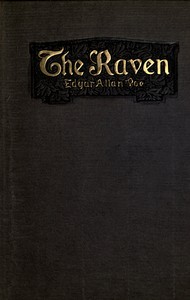
The Raven, and The Philosophy of Composition by Edgar Allan Poe
This book is really two things in one. First, you get the full, haunting text of Poe's famous poem, 'The Raven.' You know the one—a grieving man is visited by a mysterious black bird that only says one word, driving him deeper into sorrow. But the real star of the show is the second part: Poe's essay, 'The Philosophy of Composition.'
The Story
In 'The Raven,' a lonely scholar, mourning his lost love Lenore, hears a tapping at his chamber door. It's a raven, who flies in and perches on a bust above the door. The man, half-mad with grief, starts asking the bird questions. To every single one, the raven answers, 'Nevermore.' This single, repeated word becomes a brutal mirror for the man's despair, confirming his worst fears that he will never see Lenore again, and that his sadness is permanent.
Why You Should Read It
Reading the poem is one thing, but getting Poe's commentary is a whole different experience. He argues that a good story or poem shouldn't come from wild inspiration, but from careful, almost mathematical planning. He wanted to create a mood of 'melancholy' and decided 'beauty' was the best way to get there. He explains why he chose a raven over a parrot, why the room needed to be furnished a certain way, and how the sound of the word 'Nevermore' was perfect for his goal. It's incredibly satisfying. It takes something that feels like magic—the poem's eerie power—and shows the clever, deliberate craft behind it. It made me appreciate the poem ten times more.
Final Verdict
This is a must-read for anyone who loves stories, writes stories, or is just curious about how art works. It's perfect for writers looking for a masterclass in building mood, for readers who want to peek behind the literary curtain, and for fans of Poe who think they've seen it all. It's short, surprisingly clear, and one of the most fascinating looks at the creative process I've ever read. You'll never think about 'The Raven'—or any great piece of writing—the same way again.
This publication is available for unrestricted use. Enjoy reading and sharing without restrictions.
Charles Williams
7 months agoIf you're tired of surface-level information, the clarity of the writing makes even the most dense sections readable. If you want to master this topic, start right here.
Michael Jones
2 years agoExceptional clarity on a very complex subject.
Joseph Martinez
6 months agoThe methodology used in this work is academically sound.
Margaret Jones
9 months agoInitially, I was looking for a specific answer, but the language used is precise without being overly academic or confusing. It’s a comprehensive resource that doesn't feel bloated.

Emily Jones
10 months agoFrom a researcher's perspective, the bibliography and references suggest a high level of research and authority. Thanks for making such a high-quality version available.