
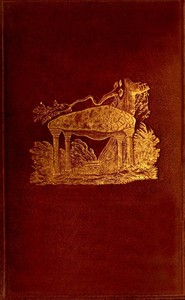
Rude Stone Monuments in All Countries: Their Age and Uses by James Fergusson
Forget a traditional plot—this book is an argument. Published in 1872, it's James Fergusson's full-throated case against the popular archaeological ideas of his time. Back then, the go-to explanation for any mysterious stone circle, dolmen, or menhir was often 'Ancient Druids' or 'prehistoric sun-worship.' Fergusson, a Scottish architectural historian who had traveled the world, thought that was lazy thinking.
The Story
Fergusson acts as a global tour guide and a debunker. He systematically examines famous sites like Stonehenge and Carnac, but also lesser-known monuments from India to Scandinavia. His 'story' is the journey of his own reasoning. He compares architectural styles, looks at historical records the experts ignored, and asks simple questions like, 'Does this look like a temple, or could it be a tomb, a boundary marker, or even a medieval memorial?' He presents evidence that many structures are centuries younger than believed. The drama comes from watching him dismantle cherished theories and replace them with what he sees as more sensible, often more recent, explanations.
Why You Should Read It
You should read it to see how history is made—through argument. Fergusson isn't a detached scientist; he's a guy with a bee in his bonnet, and his passion is contagious. Even when you suspect he might be overreaching, you have to admire his global perspective and his refusal to just accept the popular story. The book is a time capsule of 19th-century thought, showing both its brilliance and its blind spots. It reminds us that the past is never just one story, and that sometimes you have to question the experts to get closer to the truth. It's less about the final answer and more about the thrill of the investigation.
Final Verdict
This is a perfect pick for history lovers who enjoy a good intellectual scrap. It's for the traveler who stares at old ruins and wonders about the real story, and for anyone who likes seeing established ideas challenged. Be warned: it's a 19th-century book, so the prose can be dense in places. But if you push through, you're rewarded with the mind of a fascinating, stubborn, and wildly knowledgeable guide. You won't get all the right answers (modern archaeology has moved on), but you'll get a masterclass in how to ask better questions.
This title is part of the public domain archive. Share knowledge freely with the world.
Elizabeth Miller
10 months agoI appreciate how this edition approaches the core problem, the data points used to support the main thesis are quite robust. It definitely lives up to the reputation of the publisher.
Linda Hernandez
8 months agoGiven the current trends in this field, the bibliography and references suggest a high level of research and authority. An excellent example of how quality digital books should be formatted.
Emily Martinez
1 month agoThe digital formatting makes it very easy to navigate.
Sarah Scott
1 year agoThis book was worth my time since the clarity of the writing makes this accessible. A true masterpiece.





Linda Martin
3 months agoExceptional clarity on a very complex subject.