
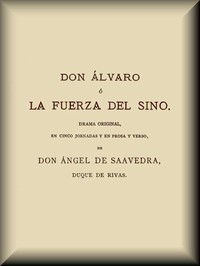
Don Álvaro, o, La fuerza del Sino by duque de Angel de Saavedra Rivas
The Story
Picture this: Spain in the 1700s. A mysterious man named Don Álvaro, whose past is a secret, arrives in Seville. He falls head over heels for Doña Leonor, but her father, the Marquis of Calatrava, forbids the match. He thinks Álvaro isn't good enough. The young lovers plan to run away, but they get caught. In the chaos, Álvaro accidentally kills the Marquis. This one moment sets off a chain reaction of disaster. Guilt-ridden and heartbroken, Álvaro and Leonor separate, each believing the other is dead.
Years go by. Álvaro tries to start over, even joining the army, but his past won't let him go. Leonor's brothers are now grown men, and they've spent their lives hunting for the man who killed their father. Every time Álvaro finds a sliver of peace or a new purpose, fate intervenes. A chance encounter, a mistaken identity, a twist of bad timing—it all leads him right back into the path of the vengeful brothers. The story builds to a final, heartbreaking confrontation where secrets are revealed, and the true 'force of fate' makes its final, crushing move.
Why You Should Read It
This isn't just a dusty old play; it's incredibly gripping. The characters feel real in their desperation. Álvaro is a great tragic hero—you root for him even as you see the walls closing in. The theme of destiny is handled in a way that feels less like a philosophy lesson and more like watching a car crash in slow motion. You keep hoping he'll find a way out, but the tension is relentless.
I also love how it mixes high drama with genuine human emotion. The scenes between Álvaro and Leonor are tender, and the brothers' quest for revenge feels terrifyingly single-minded. It makes you think about honor, guilt, and whether some mistakes are too big to come back from. The language is poetic but direct, and the plot moves at a breakneck speed once it gets going.
Final Verdict
Perfect for anyone who loves classic tragedies with a lot of heart and a relentless plot. If you enjoyed the doomed romance of 'Romeo and Juliet' or the inescapable fate in stories like 'Oedipus Rex,' you'll find a lot to love here. It's also a fantastic pick for readers curious about Spanish Romanticism—this book is a cornerstone of that movement. Don't let the 19th-century publication date scare you off; the emotions and the central question of free will versus destiny are timeless. Just be ready for an ending that will stick with you.
This historical work is free of copyright protections. Knowledge should be free and accessible.
Emily Wright
1 year agoFinally a version with clear text and no errors.
Edward Smith
1 year agoGreat read!






Emma Brown
2 years agoVery interesting perspective.