1

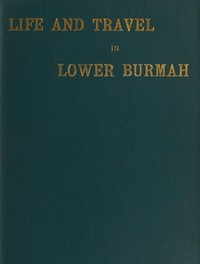
Life and Travel in Lower Burmah: A Retrospect — Edition Insights
(0 User reviews)
258
Project Gutenberg
2019
Not confirmed
Burma -- Description and travel
Readers of public-domain and historical texts
Project Gutenberg digital edition
en
Edition facts
Words
78,093
Reading time
340 min
Text sections
26
This digital edition of Life and Travel in Lower Burmah: A Retrospect — Edition Insights is described by source-level measurements including 78,093 words, 5 hr 40 min estimated reading time, and 26 detected text sections.
The text analysis averages about 29.8 words per sentence, while the detected sections provide another way to judge how the source is divided.
Project Gutenberg metadata also associates the work with “Burma -- Description and travel,” connecting these edition facts with the source record’s subject description.
Source:
Project Gutenberg record #59086
A retrospective account of British military life in 19th-century Lower Burma, blending travel observations with critical reflections on colonial administration, military culture, and the natural environment.
Read the complete public-domain text at its original source.
Read on Project GutenbergDeputy Surgeon-General C. T. Paske's Life and Travel in Lower Burmah: A Retrospect offers a distinctive blend of personal reminiscence and pointed commentary on British colonial presence in Burma. Written years after his service, the narrative self-consciously distances itself from the contemporary fashion for immediate travelogues, as editor F. G. Aflalo notes in his preface: opinions held under the 'unsettling influence of travel' might be 'considerably modified' with time. The result is a work that treats its own retrospective stance as a virtue, allowing Paske to juxtapose vivid descriptions of Burmese landscapes and wildlife with sharp assessments of military and administrative practices.
The Editor's Defense of Delay
Aflalo's preface frames the entire work as a deliberate counterpoint to the 'injudicious practice' of publishing travel records immediately upon return. He argues that a decade's distance allows opinions to mature, and that Paske's manuscript, amended over two years, offers an 'unbiassed account' of official residence in a promising Eastern possession. This editorial framing is not mere modesty; it signals a tension between immediacy and reflection that runs through the text. Paske himself later notes that 'the yarns unfolded afforded me an insight into the recesses of human nature,' suggesting that time has deepened his understanding of the events he describes. The preface also touches on broader anxieties about the proliferation of books, invoking Macaulay's New Zealander and Dr. Johnson's advice on reading, which positions the work within a Victorian discourse on literary production and imperial knowledge.
Military Life and the Landscape
Paske's descriptions of Lower Burma oscillate between the practical and the picturesque. He contrasts the 'depressing monotony' of Indian roads with the more varied terrain around Prome, where walks lead past 'stately trees and flowering shrubs,' fly-catchers with 'burnished plumage,' and woodpeckers tapping 'with their hammer-shaped bills.' Yet this natural beauty is never divorced from military purpose: one favoured walk 'swept inland, enclosing with two others a huge space, in which lay our entire force,' its 'breadth and culverts' evidence of military design. The economic realities of campaign life also surface: no house rent, curtailed mess bills, and the collection of outstanding debts from military tailors. Paske notes that saving money in such conditions 'reflected no credit on any man' but was 'a case of necessity rather than choice,' grounding the narrative in the mundane logistics of colonial soldiering.
Colonial Administration and the Sepoy Mutiny
Paske's retrospect extends to critical reflections on British rule in India. He argues that the old East India Company, despite permitting young officers to enter service before their education was complete, 'produced able men.' The Mutiny, he claims, arose not from Company failings but from 'the evils of interference from home,' which weakened authority. The 'annexation of Oude' and the 'greased cartridge' episode served as convenient handles for sepoys who recognized their advantage. In judicial matters, the British were 'exacting,' but in military matters 'far too lenient,' a disparity Paske attributes to commanders 'imperfectly acquainted with the Asiatic character.' These observations, while reflecting the biases of their time, reveal a writer engaged with the structural tensions of imperial governance, and they anchor the personal narrative in broader historical debates.
Readers approaching Paske's account should attend to the interplay between its two registers: the precise, often lyrical observation of Burmese flora, fauna, and terrain, and the more polemical passages on military and administrative policy. The retrospective format invites scrutiny of how memory reshapes experience—a process the editor explicitly acknowledges. The work is neither a straightforward travelogue nor a systematic history, but a hybrid that rewards attention to its shifts in tone and its willingness to critique the very institutions the author served.
After finishing that Burma account, I found myself thinking about how place shapes us without our noticing—the yellowed pages, the heat, the quiet inevitabilities. It reminded me of something gentler, Studies of Travel: Greece — Reading Companion, where the same sense of passing through another land leaves a trace behind, like a tide mark left on a shore. Some books simply stay, don't they.
There are no reviews for this eBook.
There are no comments for this eBook.
Reader reflection
How did this book work for you?
Your answers remain private and are stored only in this browser.
Your progress
0
/
10
2
Was reading this book enjoyable?
3
How likely are you to recommend this book?
4
What was the reading difficulty like?
5
How would you describe its reading pace?
6
Would this book work well in a reading group?
7
Did the book offer a fresh perspective?
8
Do you expect to return to this book?
9
What changed or sharpened your thinking?
10