
Gifts of fortune, and hints for those about to travel — Edition Insights
Edition facts
For Gifts of fortune, and hints for those about to travel — Edition Insights, the stored edition analysis reports 60,052 words, 4 hr 22 min estimated reading time, and 18 detected text sections.
The text analysis averages about 17.8 words per sentence, while the detected sections provide another way to judge how the source is divided.
Project Gutenberg metadata also associates the work with “Travel,” connecting these edition facts with the source record’s subject description.
Calculated from edition completeness, EPUB availability, text structure and catalogue metadata. Not a user rating.
How this score is calculated
- Description quality20 pts
- Title & short description10 pts
- Source metadata20 pts
- Text length15 pts
- Chapters / structure15 pts
- EPUB file integrity20 pts
Total of 100 points, scaled to a 2.5-5.0 range. Editions with an empty description or a missing EPUB file are not scored.
Read the Text
r his cruel decision one morning on the office stairs, a trivial episode he has completely forgotten. It is worth the break, and the discomfort of a winter dock, and the drive out in the face of hard westerly weather, to come up a ship’s companion one morning, and to see for the first time the glow of sunrise above the palisade of the jungle. You never forget the warm smell of it, and its light; though that simple wonder might not be thought worth a hard fight with gales in the western ocean. Yet later, when by every reasonable estimate of a visitor accustomed to the assumption of man’s control of nature the forest should have ended, yet continues as though it were eternal--savage, flamboyant, yet silent and desolate--the voyager begins to feel vaguely uneasy. He cannot meet that lofty and sombre regard with the cheerful curiosity of the early part of the voyage. He feels lost. St. Paul’s cathedral does not seem so influential as once it did, nor man so important. And perhaps it is not an unhealthful surmise either that man may be only a slightly disturbing episode on earth after all, and had better look out; a hindering and humbling notion of that sort would have done him no harm, if of late years it had given him pause.
Well, something of that sort is about as much as one should expect to get out of the experience, that and the ability to call for a porter in Fijian or Chinese. But is it not sufficient? It is hardly as tangible as hearing earlier than the people at home of the wealth of oil at Balik-papan, or what comes of getting in at the Rand on the ground floor. Even as book material it is not so sparkling as Lady Hester Stanhope, or as exciting as sword-fish angling off the Bermudas. Nor does it provide any inspiration, once you are home again, to get to work to plant the British flag where it will do the lucky ones most good. There seems hardly anything in it, and yet you feel that you could not have done any better, and are not sorry it turned out just so.
Besides, there were the men one met. It would not be easy to analyse the impulse which sent one travelling, an impulse strong enough, if vague, to overcome one’s natural desire to be let alone. What did one want, or expect to learn? It would be hard to say. But you are aware, in rare moments, that you have got something almost as good as a word about a new oil-field, through some chance converse with a stranger, about nothing in particular. For it might have been night in the Malacca Strait, with little to give reasonable conviction of the realities except the stars, the tremor of the ship’s rail, and the glow of a shipmate’s cigar; and the other man might not have said much. You had previously noticed he was not that kind. But his casual relation of an obscure adventure--rather as if the droning of the waters had become a significant utterance--gave an abiding content to the shadows.
What right have we to travel, when better men have to stay at home? But it would be unwise to attempt an answer to that question, for certainly it would lead, as did the uncorking of the bottle that imprisoned the Genie, to much smoke and confusion. We should not poke about with a naked light amid the props which uphold the august and many-storied edifice of society, even to make sure of our rightful place there. It was a reading of Lord Bryce’s _Memories of Travel_ that started so odd a doubt in my mind. When I had finished it I did not begin to think of packing a bag. I felt instead that I had no title to do that. Lord Bryce, that learned man, had been remembering casually Iceland and the tropics, Poland, the Mountains of Moab, and the scenery of North America. But he did not make me feel that those places should be mine. He, that great scholar, made them desirable, yet infinitely remote, and reservations for wiser men, among whom, if I were bold enough to intrude, my inconsequence would be detected instantly. After reading his book of travel I felt that it would be as wrong in me to possess and privily to treasure priceless Oriental manuscripts as to claim the right to see coral atolls in the Pacific or prospects of the Altai.
We may lack the warrant to travel, even if we have the means. Lord Bryce made it coldly clear that few of us are competent to venture abroad. He made me feel that much that would come my way would be wasted on me, for I have little in common with the encyclopædias. The wonders would loom ahead, would draw abeam, would pass astern, and I should not see them; they would not be there. The pleasures of travel, when we are candid about them, are separated by very wide deserts and tedious, where there is nothing but sand and the dreary howling of wild dogs. An Eastern city may grow stale in a night. “‘Dear City of Cecrops’ saith the poet; but shall we not say, ‘Dear City of Zeus?’” There are days when the ocean is a pond. Its relative importance then appears to be that of a newspaper of last week. Sometimes, too, you do not want to hear that there are three miles of water under you; no less. What of it? In nasty weather the end so far below you of the last two miles is of less importance than the beginning of the first.
It may also happen that when at last your ship reaches that far place whose name is as troubling as the name of the star to which you look in solitude, that--what is it you do there? You gaze overside at it from your trite anchorage, unbelievingly. The first mate comes aft, leisurely, rubbing his hands. You do not go ashore. What has become of the magic of a name? You go below with the mate, who has finished his job, for a pipe. To-morrow will do for Paradise, or the day after. One morning I reached Naples by sea, and I well remember my first sight of it. The stories I had heard of that wonderful bay! The ecstatic letters in my pocket from those who were instructing me how nothing of my luck should be missed! But it was raining. It was cold. I had been travelling for an age. There was hardly any bay, and what I could see of it was as glum as a bad mistake. There was a wet quay, some house fronts that were house-fronts, and a few cabs. I took a cab. That was better than walking to the railway station, and quicker. It is quite easy for me to describe my first sight of Naples and its bay.
But Lord Bryce was not an incompetent traveller. He could see through any amount of rain and dirt. He was competent indeed; fully, lightly, and with grace. To other tourists he may have appeared to be one of the crowd, trying hard to get some enjoyment out of a lucky deal in rubber or real estate, and not knowing how to do it. But he was not bored. He was quiet merely because he knew what he was looking at. What to us would have been opaque he could see through; yet I doubt whether he would have said anything about it, unless he had been asked. And why should we ask a fellow-traveller whether he can see through what is opaque? We never do it, because our own intelligence tells us that what is dark cannot be light. What we do not see is not there.
Yet how much we miss, when on a journey, Lord Bryce reveals. There was not often a language difficulty for him. When he looked at the wilderness of central Iceland he knew the cause of it, and could explain why tuffs and basalts make different landscapes. When he was in Hungary and Poland the problems we should have brushed aside as matters no Englishman ought to be expected to understand, became, in the light of his political and historical lore, simple and relevant. Among the islands of the South Seas, with their unsolved puzzles of an old continental land mass and of race migrations, so learned a traveller was just as much at ease. Once I remarked to an old voyager, who in some ways resembled Lord Bryce, that it was in my dreams to visit Celebes. “But,” he remarked coldly, “you are not an ethnologist.” No; and I can see now, after these _Memories of Travel_, that I have other defects as a traveller.
Yet I cannot deny that a craving for knowledge, when abroad, may sometimes come over me, with a dim resemblance to the craving for food or sleep. But if I go to my note-books in later years and discover that though I had forgotten them I had many interesting facts stored away, nevertheless it is evident the valuable information does very well where it is. It will never be missed. Its importance has faded. There are other things, however, one never entered in a notebook, and never tried to remember, for they were of no seeming importance then or now, things seen for an instant only, or smelt, or heard in the distance, which are never forgotten. They will recur from the past, often irrelevantly, even when the memory is not turned that way, as though something in us knew better what to look for in life than our trained eyes.
Travel, we are often told, gives light to the mind. I have wondered whether it does. Consider the sailors. They are supposed to travel widely. They see the cities of the world, and the works of the Lord and His wonders in the deep. And--well, do you know any sailors? If you do, then you may have noticed that not infrequently their opinions seem hardly more valuable than yours and mine. Yet it must be said for them that they rarely claim an additional value for their opinions because they have anchored off Colombo. They know better than that. They know, very likely, that all the cities of the world can no more give us what was withheld at our birth than our unaided suburb. As much convincing folly may be heard at Penang as at Peckham. The sad truth is, one is as likely to grow wiser during a week-end at Brighton as in a “black Bilbao tramp
With her load-line over her hatch, dear lass, And a drunken Dago crew, And her nose held down on the old trail, our own trail, the out trail, From Cadiz, south on the Long Trail--the trail that is always new.”
The fascination and illusion of that Out Trail! The other day, a man, a wise and experienced traveller, who knows deep water better than most of us, who has hunted whales, and even enjoyed being out of soundings in literature, overheard a voice near us on a dock-head exclaim in delight at the sight of a ship outward bound: “I wish I were aboard her.” He said to me quietly, “I felt like that, too, but really, you know, I don’t want to be aboard. I’m a little bit afraid of the sea.”
So am I. That is one thing, at least, I have learned in travel. I do not love the sea. The look of it is disquieting. There is something in the very sound of it that stirs the apprehension we feel when we listen to noble music; we became inexplicably troubled. It is not the fear of mishap, though that may not be absent. It is more than that, for after all one is much safer in a good ship than when crossing the road at Charing Cross.
It may be a surmise of one’s inconsequence in that immensity of sky and water. And our inconsequence has not been always obvious to us. The ministrations of a city nourish the pride of the social animal and yet make him a dependable creature. Turn him into the open and he shrinks from all that light. The dread problems that our energetic fellow-men create in the cities of the plain make us myopic through the intensity of our peering alarm. We become sure that even the empyrean must watch our activities with grave interest. Yet we may be deceived in that; for on blue water one cannot help noting that the sky does not appear to act with any regard for our interest, and the sea itself is so inscrutable, so vast, and moves with a rhythm that so diminishes one’s own scope and measure, that a voyager may imagine he is confronted by majesty, though an impersonal majesty, without ears or eyes or ruth. That is not comfortable to a sense of self-importance.
Do we travel to learn such things? Of course not. The promise to diminish a feeling of self-importance in a traveller is not one of Messrs. Cook’s happy inducements. We do not travel for that. If we get it at all, we are welcome to it, without extra charge. You must pay more if you want to have a cabin to yourself. There are additional charges, too, if you would deviate from the schedule of your voyage. Should you put off at Penang for a week, and continue by the next ship, that fun must be paid for. Eager still for the end of the rainbow--which, so far on a long voyage, you have not reached, to your surprise and disappointment--you leave your ship at Barbadoes, consult the chart, and judge that what you really want is at Yucatan, at Surinam, at Trinidad, or some other place where you are not; and at a great expense of time and money you go. No use. There again you find that you have taken yourself with you. No rainbow’s end!
I have often wondered what people see who travel round the world in a liner furnished with the borrowings of a city’s club-life and other occasions for idling; Panama, San Francisco, Honolulu, Yokohama, Hong-Kong, Batavia, and Rangoon, all those variations of scenery for the club windows; and so home again. What do they see? The anchorage of Sourabaya is no more revealing than that of Havre, if warmer: a mole, ships at rest, some straight miles of ferro-concrete quays in the distance, flat grey acres of the galvanised roofs of sheds, and a tower or two beyond. True, there are the clouds of the tropics to watch, and a Malay polishing the ship’s brass. Only the mate and the captain are at lunch, for the others have gone ashore. You may make what romance you can out of that.
The others have gone ashore? All the great seaports I have seen have been very much alike; and these liners rarely stay at one long enough to make easy the discovery of a difference. You have no time to get lost. You arrive, and then an inexorable notice is chalked on the blackboard at the head of the ship’s gangway, to which a quartermaster draws your attention as you leave the ship. The old city is two miles away, and the ship sails in two hours. No chance, you see, to get comfortably mislaid and forgotten. Besides, you run off with a car-load of other passengers. Unless the car skids into a ditch the game is up.
Well, after all, that grudging sense of disappointment comes of intemperance with fascinating place-names and illusions. We expect to have romance displayed for us, as though it were a greater Wembley, and it is not. Travellers who “dash” round the world, as the febrile interviewers tell us, who dash across the Sahara or the Atlantic, then get into other speedy engines and dash again, expectant of a full life and their money’s worth, might as well dash to Southend and back till they run over a dog; or dash their brains out, and thus fulfil their destiny. But I am not decrying travel, though sailors, I have been made painfully aware, are much amused by the expectations of those to whom a ship is an interlude of variegated enchantment between the serious affairs of life. I enjoy travel, and a little of it now and then is good for us, if we do not make demands which only lucky chance may fulfil.
The best things in travel are all undesigned, and perhaps even undeserved. I had never seen a whale, for instance, and recently was watching the very waters of the Java Sea where one of them might have been good enough to reward me. Nothing like a whale appeared. Too late for that sort of thing, perhaps. This is the day of the submarine. Or perhaps I stared from the ship listlessly, and with no faith, not caring much whether there were whales and wonders in these days or not. Anyhow, my last chance went. On my way home, while just to the south of Finisterre, I came out of my cabin a little after sunrise merely to look at the weather (which was fine) and a tiny cloud, rounded and defined, was dispersing over the waves, less than a mile away. Shrapnelling? Then a number of those faint rounded clouds of vapour shaped intermittently. The ship was in the midst of a school of whales. There was a sigh--like the exhaust of a locomotive--and a body which seemed to rival the steamer in bulk appeared alongside; we barely missed that shadow of a submerged island. The officer of the watch told me afterwards that the ship’s stem nearly ran over it.
That was a bare incident, however, and perhaps not worth counting. Yet all the significant things in travel come that way. Once in heavy weather I saw a derelict sailing ship; our steamer left its course to inspect her. But she was dead. There was no movement aboard her, except the loose door of a deckhouse. It flung open as we drew near, but nobody came out. The seas ran as they pleased about her deck fixtures. It was sunset, and just when we thought she had gone, for she had slipped over the summit of an upheaval, her skeleton appeared again in that waste, far astern, against the bleak western light. I felt in that moment that only then had the sea shown itself to me.
It is the chance things in travel that appear to be significant. The light comes unexpectedly and obliquely. Perhaps the gods try us. They want to see whether we are asleep. If we are watchful we may get a bewildering hint, but placed where nobody would have expected to find it. We may spend the rest of the voyage wondering what that meant. A casual coast suddenly fixed by so strange a glow that one looks to the opposite sky fearfully; the careless word which makes you glance at a stranger, and doubt your fixed opinion; an ugly city, which you are glad to leave, transfigured and jubilant as you pass out of its harbour; these are the incidents that give a sense of discovery to a voyage. We are on more than one voyage at a time. We never know where Manoa may be. There are no fixed bearings for the City of Gold.
The reader of travellers’ tales is a cautious fellow, not easily fooled. He is never misled by facts which do not assort with his knowledge. But he does love wonders. His faith in dragons, dog-headed men, bearded women, and mermaids, is not what it used to be, but he will accept good substitutes. The market is still open to the ingenious. Any lady who is careful to advise her return from the sheikhs is sure to have the interviewers surprise her at the dock-side. She need only come back from Borneo, by the normal liner, and whisper “head-hunters” to the ever-ready note-books; and if she displays a _parang_ which some Dyak never used except for agricultural purposes, that will be enough to rouse surprise at her daring.
The opening section, “Some Hints for Those About to Travel,” begins not with a list of packing tips but with a discussion of another book, The Happy Traveller by the Rev. Frank Tatchell. Tomlinson uses this as a springboard to question what drives people to travel—a word he notes is often glossed as “Wanderlust.” The tone is conversational and skeptical, more interested in the psychology of the traveler than in practical advice. The excerpts that follow, including a long anecdote about a captain and a parson known as “the blackbird,” suggest that the book’s real subject is the texture of travel itself: the characters met, the moods of the sea, and the unexpected turns of a voyage.
The Traveler’s Motive
Tomlinson opens by questioning why people travel, using the Rev. Tatchell’s book as a foil. He notes that “Wanderlust” is often used as a flourish by those “uncertain what to do with themselves.” This skepticism sets the tone for the entire work. The excerpts show that Tomlinson is less interested in destinations than in the impulse to move. He praises Tatchell for seeing the world “from the byroads, the highroads, the decks of local trading ships,” implying that the manner of travel matters more than the itinerary. The advice “Be cheerful and interested in everything” is quoted, but Tomlinson’s own narrative dwells on the opposite: the moments of doubt, the “white feeling inside me while gripping a stanchion.” The opening thus establishes a tension between the ideal of the happy traveler and the reality of unease at sea.
The Blackbird and the Skipper
A central anecdote in the first section introduces a recurring character: a parson known as “the blackbird” who delights in joining coastal ships just before a storm. The skipper recounts how the man appears “as pleased as though he’d come into a legacy” when the barometer drops. The crew’s mixed feelings—they would “tip him overside” but tolerate him because he “pays for his fun”—reveal a complex social dynamic aboard ship. Tomlinson’s own decision to join the voyage is swayed by the captain’s invitation and the peaceful cabin with its library. The blackbird’s sudden return, announced by the steward, undercuts the promise of a quiet trip. This episode illustrates Tomlinson’s method: he builds a scene through dialogue and detail, letting the characters’ voices carry the narrative. The parson is never explained, only observed.
Landscape Without Message
In “On the Chesil Bank,” Tomlinson describes a coastal scene that is “pleasing, but strange.” The Chesil Bank is a “whitewashed wall topped by a tamarisk hedge,” with a beach of “tawny and glowing” shingle and a sea empty of ships. He admits it had “no message” and was “as far from my own interests as a West Indian cay.” This frankness is characteristic: Tomlinson does not impose meaning on the landscape. Instead, he records its appearance and his own detachment. The passage contrasts with the shipboard scenes, where human interaction and weather create drama. Here, the land offers only a static, almost alien beauty. The excerpt breaks off before the essay develops, but the opening suggests that Tomlinson’s travel writing is as much about the traveler’s mood as about the place itself.
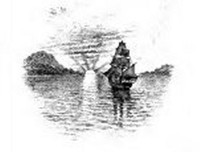
Readers should approach Gifts of Fortune not as a guidebook but as a series of meditations on the experience of travel, told through anecdotes and reflections. Tomlinson’s voice is wry, observant, and often skeptical of romantic notions. The woodcuts by Harry Cimino, listed in the illustrations, add a visual dimension that complements the text’s focus on ships and seascapes. The book rewards those who enjoy leisurely, digressive narratives that prioritize character and atmosphere over itinerary.
Tomlinson watched the sea fret as if it were a living thing, and I have carried that restlessness into every quiet afternoon since. Yet the same generous tide also carried merchants eastward with their ledgers and letters. There is a kinship between the voyager and the trader, two ways of turning toward the horizon. Trade and travel in the Far East — Background and Themes settles beside it on my shelf, whispering of shared ports.
There are no reviews for this eBook.
How did this book work for you?
Your answers remain private and are stored only in this browser.
Brandon Buck - 3 weeks ago
Kristin Gardner - 2 weeks ago
Mary Harris - 1 week ago