
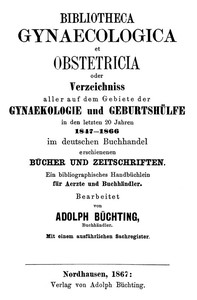
Bibliotheca Gynaecologica et Obstetricia, oder, Verzeichniss aller auf dem…
Let's be clear: this is not a novel. Bibliotheca Gynaecologica et Obstetricia is exactly what its subtitle says: a 'Verzeichniss'—a catalogue. Published in the 19th century, it's a giant, systematic listing of thousands of historical books and manuscripts focused on women's medicine and childbirth. The author is lost to time, credited simply as 'Unknown.' There's no narrative, no characters in the traditional sense. Page after page is filled with titles, authors, publication dates, and sometimes brief notes. You'll find everything from revered academic texts to obscure pamphlets with theories we'd now call frightening.
The Story
The 'plot' is one of quiet, relentless accumulation. The anonymous compiler didn't write a history; they tried to build a map of it. They tracked down every text they could find on gynecology and obstetrics, creating a record of how knowledge (and often, speculation) about women's bodies was collected and passed down. Reading it, you don't follow a person's journey—you follow the journey of an entire field of study. You see the same topics reappear across decades, watch Latin titles give way to German or French, and sense the slow, uneven march toward something resembling modern medicine. The drama is in the gaps and the sheer weight of the endeavor.
Why You Should Read It
This book fascinated me because it's a mirror held up to the history of science. It's not opinionated; it's just evidence. By presenting the raw bibliography, it lets you draw your own conclusions. You see the overwhelming focus on childbirth, the occasional terrifying title about 'female hysteria,' and the rare, bright spots of genuine insight. It made me think about all the women whose lives were touched by the ideas in these listed books. It’s surprisingly powerful in its silence. The anonymous author did us a huge favor: they gave us the pieces without telling us how to assemble them, which makes the act of reading it feel like collaborative detective work.
Final Verdict
This is a niche read, but a profoundly rewarding one. It's perfect for history buffs, especially those interested in medical history or women's studies, who don't mind reading between the lines. It's also great for anyone who loves the feel of old archives and the stories hidden in plain data. If you need a fast-paced plot, look elsewhere. But if you're curious about how knowledge is built—one fragile, forgotten book at a time—this unique catalog offers a perspective you won't find anywhere else. Just be prepared to do a little digging in your own imagination.
This text is dedicated to the public domain. Thank you for supporting open literature.
Dorothy Garcia
2 years agoHaving read this twice, the arguments are well-supported by credible references. Highly recommended.
Brian Flores
1 year agoMy professor recommended this, and I see why.
Kimberly Thompson
1 year agoAmazing book.

Robert Williams
6 months agoI took detailed notes while reading through the chapters and the clarity of the writing makes even the most dense sections readable. This adds significant depth to my understanding of the field.