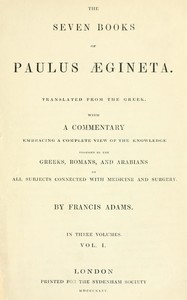
The seven books of Paulus Ægineta, volume 1 (of 3) : translated from the…
Let's be clear from the start: this isn't a novel. The Seven Books of Paulus Ægineta is a massive medical textbook from the 7th century. Think of it as the ultimate compilation of everything a doctor needed to know back then. Paulus, a Greek physician living under the early Islamic Caliphate, didn't just write down his own ideas. He gathered knowledge from centuries of Greek and Roman masters like Galen and Hippocrates, organized it, and added his own observations. The book covers everything from setting broken bones and performing surgeries to treating fevers and diagnosing diseases.
The Story
There's no plot in the traditional sense. Instead, the 'story' is the journey of medical knowledge itself. Volume 1 kicks things off by laying the groundwork. It starts with hygiene, diet, and general health principles—the preventative stuff. Then, it gets into the nitty-gritty of specific ailments, often organized from head to toe. You'll find chapters on headaches, eye problems, and toothaches right next to instructions for complex procedures. The 'characters' are the diseases and the treatments. The drama comes from seeing how a brilliant, logical mind applied the tools of his time to the eternal problem of human suffering.
Why You Should Read It
I found this book absolutely fascinating for two reasons. First, it shatters the myth that medicine in the so-called 'Dark Ages' was just superstition. Paulus is methodical, observant, and often surprisingly practical. Second, it's a powerful reminder of how knowledge survives. Paulus wasn't a revolutionary innovator; he was a preserver. In a world of political upheaval, he acted as a bridge, carrying classical learning forward so it wouldn't be forgotten. Reading his careful summaries feels like witnessing a vital act of rescue. You get a direct line to the mind of a healer who saw patients as whole people, not just collections of symptoms.
Final Verdict
This book is not for everyone. If you want a fast-paced narrative, look elsewhere. But if you're the kind of person who loves history, especially the history of science and ideas, this is a treasure. It's perfect for history buffs, aspiring doctors curious about their field's roots, or anyone who enjoys primary sources that let you touch the past. Approach it like a museum visit—dip in and out, marvel at the strange and the familiar, and come away with a deeper appreciation for the long, difficult road to modern medicine.
This title is part of the public domain archive. You are welcome to share this with anyone.